
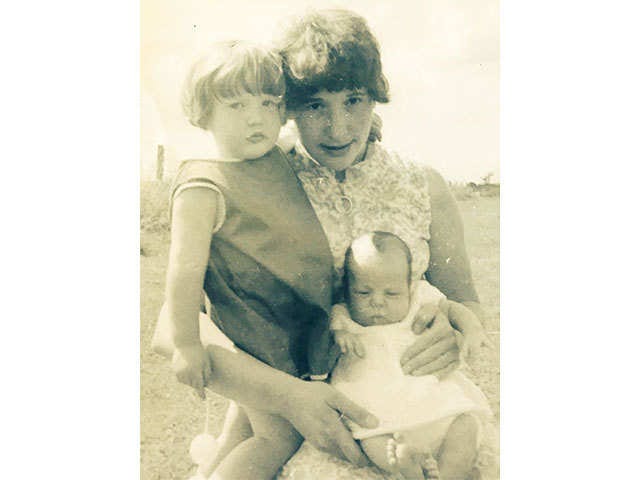
A Pen to Change the World: The Life of J. K. Rowling, Solomon Schmidt, Skyhorse Publishing (2026).
John Gardner’s advice to book reviewers was that the only criterion that is valid for judging a work of fiction or non-fiction is whether the author achieved or failed to achieve their intention in writing. That guidance is as good for texts in which the author has not shared their ambition explicitly as it is for those in which the writer spells it out; I’ll be writing about this later in the week with respect to those who continue to beat down on Hallmarked Man without considering the possibility that their confusion and discomfort with Strike 8 was exactly what Rowling intended her novel to do to her readers.
Today, though, I’m reviewing Solomon Schmidt’s A Pen to Change the World: The Life of J. K. Rowling, a book I have known to be in production from soon after the author began writing it and a copy of which I was mailed in hope of my writing about it here. The good news is that Schmidt spells out what his book is meant to do in the acknowledgements chapter, or, more precisely, what kind of book he was not writing, so it will be relatively easy to gauge its success. To keep the review simple, which is to say only ‘easy to follow,’ I’m going to share the three things I struggled with while reading the 500 plus pages of Pen to Change, the three reasons to disregard those cranky-pants misgivings, and three thoughts I had about Rowling and her work that I wouldn’t have had except for reading Pen to the end.
[Nick Jeffery has posted his review of the book at the Hogwarts Professor weblog, which I will be reading as soon as I am done writing my review, believe me.]
Three Things That I Wish Were Not True About A Pen to Change the World
I’m a Subject Matter Expert so I noticed some Mistakes
I’ve been reading, writing, about, and giving public talks online and in person about J. K. Rowling and her work since 2001. I’m known as the “Dean of Harry Potter Scholars” because of the books I’ve written, the contributions I’ve made to the niche field of Rowling Studies, and the several generations of Potter Pundits and Serious Strikers I’ve mentored and worked with.
A Pen to Change the World is more than 400 pages of text before the Source Notes and Index, each of which pages makes assertions of fact, trivial and substantial, about Joanne Murray and the books she has written under the pseudonyms of ‘J. K. Rowling’ and ‘Robert Galbraith.’ There were bound to be some miscues and I involuntarily cringed in reflex when I spotted them; Schmidt’s errors will become the accepted version of events and that is lamentable.
Three examples? The first Harry Potter post Deathly Hallows play pitched to Rowling was a prequel, not a sequel. Rowling has claimed that ‘Hogwarts’ came from a plant she read about on a trip to Botanic Gardens in London; it’s a name that occurs repeatedly as a school name in Molesworth, the only school boy series we can say with confidence she had read and knew well. Rowling said in her Harvard commencement speech she learned a core truth about life from reading Plutarch during her Classical Studies at Exeter; the quotation she cited is not from Plutarch but from a 20th Century psychologist, Otto Rank, a mistake she made by misreading an online quote anthology page.
There are more — and every one of those mistakes is just as trivial as the ones I’ve shared when put in the context of all that Schmidt gets right. Still. I cringed as a reflex at each.
It Does Not Have the Content I Most Want in a Literary Biography
The same week that I received my reviewer’s copy of Pen I also received a copy of Michael Drout’s The Tower and the Ruin: J. R. R. Tolkien’s Creation that the friend who made the publication of my first book possible had sent. It is a critical biography of Tolkien written by a Wheaton College professor who has been studying and teaching that subject for some thirty years. It weaves biography, bibliography, and Tolkien’s works magisterially.
A Pen to Change the World is nothing like that.
To be fair, it couldn’t be. Rowling is very much alive, she has not authorized a critical biography (I should say ‘none that we know of;’ rumors of same exist), her friends and family know very well that they are not to speak about her to those outside their circle, and her brigade of barristers sent Schmidt threatening letters for even trying to penetrate that barrier.
More to the point, Schmidt was only looking to write a straight forward biography, the story of a life, not a ‘critical biography’ in which the stories written by the author are interpreted in light of the life, the defining traumas, the core beliefs, etc. As he writes in Pen’s acknowledgements: “this biography was never intended to be a work of literary criticism.” He does relate repeatedly the influence of Anne Rowling’s death on her daughter and he does make some fascinating connections between Rowling’s family and the characters and events in Casual Vacancy.
But that kind of explanation and exploration, the sort of thing Rowling has invited in her ‘Lake and Shed’ discussions of her stories’ origins, is not what Schmidt set out to do. I can be as disappointed as I want that this book wasn’t the kind of book I hope someday to read, something akin to Ward’s Planet Narnia or Shippey’s Tolkien: Author of the Century. I cannot fault Schmidt, though, for not trying to write that kind of book. Especially because he has succeeded in writing the book he set out to write and for which there has long been a need.
It Marks British Spellings as Errors
The editors at Skyhorse Publishing decided that British spellings of common words that differ from American spellings are errors that need to be marked in text with a parenthetical (sic). That (sic), Latin for “thus,” means that this mistake was in the original text, caught by the biographer, editor, or AI device, and left as is as a mark of authenticity.
You will appreciate how many words there are in this category after reading A Pen to Change the World because you will have stopped again, again, and again at the (sic) to find the mistake — and realize it is just a British spelling. Which is not a mistake or even a misspelling. I can only hope that the UK edition of Pen will not have these attention breaking stoppages which will mystify readers ‘over there.’
Three Reasons You Will Enjoy Reading Pen and Will Want This Book on Your Shelf
Pen is Exactly What It Says It Is — and Satisfies the Need It Aims To Satisfy
It’s been twenty five years since the publication of Sean Smith’s J. K. Rowling: The Genius Behind Harry Potter, a work that for all its failings has remained unchallenged as the go-to publication for a narrative telling of Rowling’s life. The need for an updated version has grown every year since Genius hit the shelves, Smith for unknown reasons has not written one, and most writers looking for details of the author’s background, I suspect, refer more often to the ‘facts’ to be found on Rowling’s thoroughly bleached Wikipedia page.
Rowling turned 60 last July and her 24th book Hallmarked Man came out that September — and the most recent biography stops when she was 35 and had written four Potter novels. A new biography that did not attempt a critical or literary look at the life and the works would have to include a quarter century of interviews, essays, controversies, accomplishments, as well as the twenty books, screenplays and play script she had a hand in.
And that, as noted above, is what Schmidt set out to write.
In my judgement, he has succeeded. It’s not complete for all the reasons mentioned, none of which are Schmidt’s fault. Until Rowling authorizes a critical biography, takes the muzzles off her husband Neil, her friends Sean and the Sisters of Swing, and her sister Dianne, and opens her archives to a historian cum literary maven, the best we can hope for and ask of a Rowling biography is that it be factual, engaging, accessible, and comprehensive — everything she has related about her life experiences, beliefs, reading, and ambitions between two covers.
Which is what you get in A Pen to Change the World. For the serious reader and re-reader of Rowling-Galbraith, it’s an enjoyable read and a reference work you’ll want to have on your shelf of her two series of novels and three stand-alones.
The Author is a Rowling Fan but Gives Her Critics Air Time
Schmidt is clearly someone who admires Rowling as a writer, as a philanthropist, and as a person. Whatever criticisms he makes of her choices — and they are few — are muted and balanced by her defense.
The book, however, does not read as hagiography, either. Schmidt’s coverage of the ongoing (never-ending?) transgenderism conflict between Radical Gender Extremists and both Gender Critical Feminists and traditional believers, though he clearly has an opinion on the subject, is not one-sided. He covers the controversy and the history of its battles with illustrative quotations and citations.
The Photos? No, It’s the Notes!
I confess.
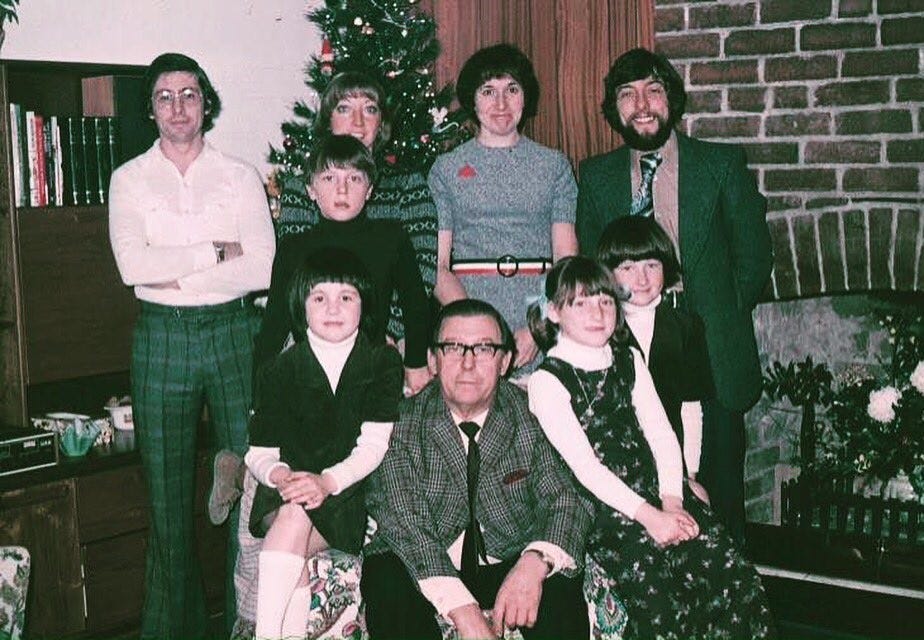
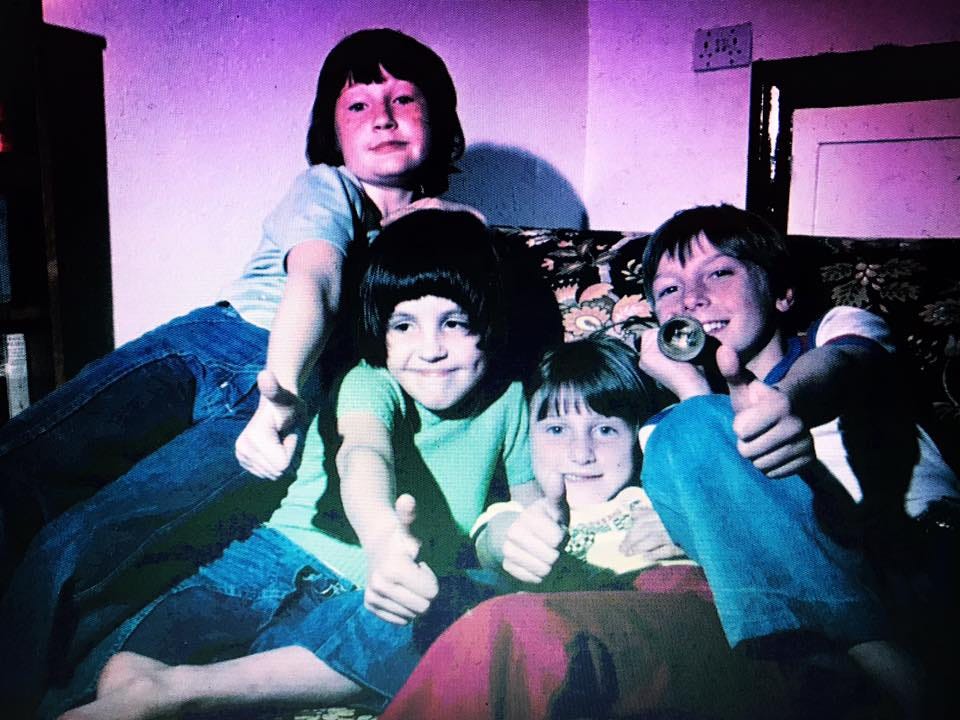
I looked at the two sets of color (not colour!) photographs in A Pen to Change the World before, during, and after my reading of the book. Most of them are familiar to Rowling Studies adepts. The ones from the Ben and Bryonny Rowling family vaults, however, were new to me and a delight: 70s vintage family and school snaps. Photographers will grimace (as will Rowling, alas) but to those of us whose childhood family pictures look much like this, they’re a blast from the kodachrome past. And who knew Rowling camped out as a child?
The Sean Smith biography got all of its revelations about Rowling’s first marriage from her first husband and mother-in-law in Porto. Schmidt’s ‘big finds’ were in Rowling’s paternal cousins who filled in a lot of blanks about the Rowling and Volant extended families. [I’m sure Nick Jeffery has written about this in his review of Pen but check out his October 2021 ‘Rowling’s American Family’ that profiles Ben and Bryonny with special emphasis on their bitterness about being shut out by their famous cousin.]
As fun as the fotos are, though, they’re not a reason to buy the book. A very good reason to buy the book is Schmidt’s ‘Source Notes,’ ninety pages of url, text, and interview references cued to the page in Pen in which the quotation or fact is mentioned.
No, it doesn’t have every interview Rowling has done. No, it isn’t especially easy to use, flipping from text to the Source Notes in the back. Yes, it would be great if we had a searchable resource online for subject inquiries across all Rowling interviews, cf., the old Accio-Quote.
But for those of us used to searching through the HogwartsProfessor weblog, The Rowling Library Index, Accio-Quote, the Harry Potter Lexicon, and Beatrice Groves’ Literary Allusion in Harry Potter to find the interview in which Rowling explained the meaning of Remus Lupin or how Casual Vacancy was about the “light of God shining from every soul,” this Source Notes collection of Schmidt’s is going to be a real time saver.
For those starting out in Rowling Studies, I recommend working your way through the interviews as they are listed in Pen to Change the World. For old hands, be sure to read the interview in which Rowling said something you had never known or had long ago forgotten (an experience I had at least once every fifty pages). Examples? The ₤4000 loan to pay for childcare during her teacher training that saved her as a single mum in Edinburgh (accio-quote.org/articles//2004/0304-scotland-,acdonald.htm). Rowling’s admission that before she’d started her final draft of Philosopher’s Stone “I really had planned all seven books” (youtube.com/watch?v=ehLLNV4zX2M&t=13s—23:06-23:40). [That url, alas, doesn’t work, and I’ll be asking the author about it when Nick and I interview him!]
Three Thoughts I Had about Rowling’s Work that I Had Only Because I Read Pen to Change
How about this for fun? On page 11, Schmidt found a quotation from Rowling in which she said that an Aunt’s aside about a charm bracelet she loved as a child — “Ah, but no really nice woman likes jewellery” — marked the author forever; “What I gained that afternoon along with my new set of clinking charms was an association between wickedness and jewellery that has never entirely left me.” On page 80, Rowling, remembering feeling crushed when she was robbed of all her mother’s keepsakes, said, “Jewellery (sic) does not change, it cannot decay; it is a way of holding tight to the past.” [Yes, ‘Jewellery’ merits a (sic) on page 80 but not 11…].
For Strike fans who love to interpret the Hallmarked Man Christmas charm bracelet and Rowling’s Sleep Tight, Evangeline clues Twitter Header Christmas gift charm bracelet, that’s a revealing internal Rowling contradiction. No wonder it’s Shanker that cues Strike into what he needed to buy for Robin…
That’s an “Aha!” moment you get while reading A Pen to Change the World. Here are three more, to include the death of a favorite character cued up on Pen’s last page:
Anomie and Anomia
I have been studying words that are key in the Psalter and in Orthodox prayers in all my free time since I moved to South Carolina, one of which is “iniquity.” I was intrigued by it because it is the chiastic center of the Trisagion Prayers and, though the Greek word translated as “iniquity” is also translated “transgression” and “lawless,” it occurs six times in Psalm 50 (51), a staple of Orthodox worship. The word is anomia, with the alpha prefix being a negator, “not-,” and nomos meaning “rule, convention, norm,” the unwritten but socially enforced laws of a shamed based culture.
Reading Schmidt’s discussion of Ink Black Heart in Pen, the last Rowling book covered in the biography, for the first time incredibly I made the connection between anomia, Durkheim’s anomie, and Rowling’s villainous online Anomie in Strike 6. Silly as I’d been for not thinking of it earlier, the realization was a ground shaker for me, one touching on the halves of my study focus, professional and private. Your mileage may vary.
“Screaming Matches” in Fantastic Beasts meetings
I’ve argued almost from the publication of the first Rowling ‘Original Screenplay’ that the author had to be humming ‘Look what They Done to my Song’ after every meeting with the Two Davids and Steve Kloves. The latter’s comment that they had to teach Rowling how “to fit the woman to the dress,” i.e., chop up her story lines so they fit inside blockbuster formula parameters, made that obvious to me, beyond what was evident in the divide between the shooting script and the published screenplay (scroll down to the bottom of this post for the five pointers to Rowling’s lost story).
Schmidt quotes a Wall Street Journal article in which the conferences between Rowling and Warner Brothers about the films in development featured “screaming matches,” “threats of boycotts,” and “tears” (314). You want to know why Rowling’s Bronte Studios is making the teevee adaptations of Harry Potter for HBO+? There you have it.
Linda Ellacott will Die in Sleep Tight, Evangeline
One thing that set my teeth on edge was something that Schmidt repeats like a refrain throughout A Pen to Change the World, namely, the idea that the death of Rowling’s mother was the pivotal event of her personal and her creative life — and the real source of the depth and breadth of the Harry Potter novels. I disagree, frankly, especially about the latter piece. Rowling’s mother hadn’t died when the author had her inspiration on the train home from another weekend in Manchester with Michael (no, Schmidt did not find Michael or learn anything about him that is not well known already).
But here’s the thing. Every time Schmidt brings up the tragedy of Anne Rowling’s MS and death at 45, he has another quotation from Rowling, a different one, verifying its importance. As annoying as I found the refrain, it sure is interview-evidence based — and Rowling has only alluded to Michael once and without naming him.
On the very last page of Pen’s text, however, with Schmidt reporting his last Rowling grieving over her mother quotation did I have the epiphany. Linda Ellacott will die in Strike 9.
Here’s the paragraph in question, one taken from ‘A Letter to My Sixteen-Year-Old Self’ (2009):
Examining her life, Rowling had once written an imaginary letter to her sixteen year old self. “I … really like you, which you will find impossible to believe, given that you are racked with insecurity and self-loathing,” she noted. “Jo, give yourself a break. You’re not the only one who feels small and inadequate; you’ll realise (sic) eventually that everyone is the wizard of Oz.” She provided these additional words of counsel: “Never cut short a phone call with your mother. Never forget to say ‘I love you’.” (402)
Nick and I have been saying since the publication of Hallmarked Man that its principal function in the ten book series is to set up the dramatic revelations, agonies, and transformations that will happen in the last two books of the capstone trilogy. Robin Ellacott calls out her mother Linda in devastating fashion on the trip home to Masham with Murphy. If you’re like me, you were thrilled by Robin’s take-no-prisoners “enough of this bullshit” boundary drawing with an over=protective mother.
But how will Robin feel about her Strike 8 behaviors — her cutting short phone calls with her mother, when she deigns to take them, her argument with her about minding her own business — if Linda dies suddenly as Matt Cunliffe’s truly overbearing mother had died in The Silkworm? Linda Ellacott’s death in the next to last Strike mystery in parallel with Matt’s mother’s demise in Strike 2 will be Rowling’s opportunity to share with the world through her fictional doppelganger what it feels like not to have said goodbye properly to your mum.
There are more Rowling-Robin echoes that Serious Strikers will be startled by — e.g., Rowling discussing the “grief for the baby” she felt after the miscarriage in Porto (285), Rowling’s conversation with her children about her choice “if you had to choose between us and writing” (“I would choose you, but I would be very grumpy” 311) — but the “cut short phone calls” regret, that’s the keeper.
So, my conclusion? What I wrote as a subtitle for this review: “A Pen to Change the World: The Life of J. K. Rowling by Solomon Schmidt is a Rowling Biography that is an invaluable reference text for Potter Pundits and Serious Strikers.” I’d add that it’s a light, engaging read, delightfully well documented in its Source Notes, organized in a natural sequential progression, illegitimate conception to TERF persecution and victory in the Trans Wars. It will be the standard biographical reference until Rowling authorizes a critical biography to which she, her husband, sister, and best friends all contribute freely.
It does exactly what it set out to do and did so against strong head winds. I recommend it highly and will be keeping it close at hand when writing posts that include Rowling biographical points.
Your Linda prediction feels right. I wondered about her as the Persephone charm but for no reason other than the expectation that an important character will die in 9 and the rush (sandglass charm) to York may be because of a parent. I imagine most modern women carry guilt when their mother passes away, I do. But a mother’s phone catch-ups are never without deep and ancient caveats.
This post is not good for my book budget…
Poor Robin if you’re right about Linda… it would be a strange symmetry if they investigate Leda’s death as Linda dies 😫
Plus a strange play/inversion on Demeter/Persephone perhaps?
I really hope you share your thoughts about The Tower and The Ruin
Is Bryony Radford of Cuckoo’s Calling named for Rowling’s cousin?
Fascinating connection between anomia/anomy