

Merry Christmas! In between looking at houses to rent and packing up the Granger house in Oklahoma City, Nick and John put together this yuletide conversation about perhaps the most neglected of Rowling’s influences, Dodie Smith’s I Capture the Castle. John was a reluctant reader, but, while listening to the audio book, reading the Gutenberg.com file on his computer, and digging the codex out of his packed boxes of books, the author of Harry Potter’s Bookshelf was totally won over to Nick’s enthusiasm for Castle.
In fact, John now argues that, even if Rowling didn’t read it until she was writing Goblet of Fire as some have claimed, I Capture the Castle may be the best single book to understand what it is that Rowling-Galbraith attempts to do in her fiction. Just as Dodie Smith has her characters explain overtly and the story itself delivers covertly, When Rowling writes a story, like Smith it is inevitably one that is a marriage of Bronte and Austen, wonderfully accessible and engaging, but with important touches in the ‘Enigmatist’ style of Joyce and Nabokov, full of puzzles and twists in the fashion of God’s creative work (from the Estecean logos within every man [John 1:9] continuous with the Logos) rather than a portrait of creation per se.
Can you say ‘non liturgical Sacred Art’?
And if you accept, per Nick’s cogent argument, that Rowling read Castle many times as a young wannabe writer? Then this book becomes a touchstone of both Lake and Shed readings of Rowling’s work — and Smith one of the the most important influences on The Presence.
Merry Christmas, again, to all our faithful readers and listeners! Thank you for your prayers and notes of support and encouragement to John and for making 2025 a benchmark year at Hogwarts Professor. And just you wait for the exciting surprises we have in hand for 2026!
The Twelve Questions and ‘Links Down Below’ Referred to in Nick and John’s I Capture the Castle Conversation:
Question 1. So, Nick, we spoke during our Aurora Leigh recording about your long term project to read all the books that Rowling has admitted to have read (link down below!), first question why? and secondly how is that going?
Rowling’s Admitted Literary Influences
What I want is a single internet page reference, frankly, of ‘Rowling’s Admitted Literary Influences’ or ‘Confessed Favorites’ or just ‘Books I have Read and Liked’ for my thesis writing so I needn’t do an information dump that will add fifty-plus citations to my Works Cited pages and do nothing for the argument I’m making.
Here, then, is my best attempt at a collection, one in alphabetical order by last name of author cited, with a link to at least one source or interview in which Rowling is quoted as liking that writer. It is not meant as anything like a comprehensive gathering of Rowling’s comments about any author; the Austen entry alone would be longer than the whole list should be if I went that route. Each author gets one, maybe two notes just to justify their entry on the list.
‘A Rowling Reading of Aurora Leigh’ Nick Jeffery
Talking about ‘A Rowling Reading of Aurora Leigh’
Question 2. ... which has led me to three works that she has read from the point of view of writers starting out, and growing in their craft. Which leads us to this series of three chats covering Aurora Leigh by Elizabeth Barrett Browning, I Capture the Castle by Dodie Smith and the Little Women series by Louisa May Alcott. I read Castle during the summer. Amid all the disruptions at Granger Towers, have you managed to read it yet? How did you find it?
Capturing Dodie Smith’s I Capture the Castle: Elizabeth Baird-Hardy (October 2011)
Certain elements of the story will certainly resonate with those of us who have been to Hogwarts a fair few times: a castle with an odd combination of ancient and modern elements, but no electricity; eccentric family members who are all loved despite their individual oddities (including Topaz’s resemblance to Fleur Delacour); travel by train; a character named Rose who may have been one of the reasons Rowling chose the name for Ron and Hermione’s daughter; descriptions of food that make even somewhat questionable British cuisine sound tasty; and inanimate objects that have their own personalities (the old dress frame, which Rose and Cassandra call Miss Blossom, is voiced by Cassandra and sounds much like the talking mirror in Harry’s room at the Leaky Caldron).
But far more than some similar pieces, I Capture the Castle lends something less tangible to Rowling’s writing. The novel has a tone that, like the Hogwarts adventures, seamlessly winds together the comic and the crushing in a way that is reflective of life, particularly life as we see it when we are younger. Cassandra’s voice is, indeed, engaging, and readers will no doubt see how the narrative voice of Harry’s story has some of the same features.
A J. K. Rowling Reading of I Capture the Castle: Nick Jeffery (December 2025)
Parallels abound for Potter fans. The Mortmain’s eccentric household mirrors the Weasleys’ chaotic warmth: loved despite quirks, from Topaz’s nude communing with nature (evoking a less veiled Fleur Delacour) to Mortmain’s intellectual withdrawal. Food descriptions—meagre yet tantalising—prefigure Hogwarts feasts, turning humble meals into sensory delights. Inanimate objects gain voice: the family dress-frame “Miss Blossom” offers advice, akin to the chatty mirrors or portraits in Rowling’s world. Even names resonate—Rose Mortmain perhaps inspiring Ron and Hermione’s daughter—and train journeys punctuate the plot.
The Blocked Writer: James Mortmain, a father who spent his fame early and now reads detective novels in an irritable stupor, mirrors the “faded glory” or “lost genius” archetypes seen in Rowling’s secondary characters, such as Xenophilius Lovegood and Jasper Chiswell.
The Bohemian Stepmother: Topaz, who strides through the countryside in only wellington boots, shares the whimsical, slightly unhinged energy of a character like Luna Lovegood or Fleur Delacour.
Material Yearning: The desperate desire of Cassandra’s sister, Rose, to marry into wealth reflects the very real, non-magical pressures of class and poverty that Rowling weaves into Harry Potter, Casual Vacancy, Strike and The Ickabog.
Leda Strike parallels: Leda Fox-Cotton the bohemian London photographer, adopts Stephen, the working-class orphan, and saves him from both unrequited love and the responsibility that comes with the Mortmain family.
Question 3. [story of finishing the book last night by candle light in my electricity free castle] So, in short Nick, I thought it astonishing! I didn’t read your piece until I’d finished reading Capture, of course, but I see there is some dispute about when Rowling first read it and its consequent influence on her as a writer. Can you bring us up to speed on the subject and where you land on this controversy?
She First Read It on her Prisoner of Azkaban Tour of United States?
tom says
If I recall correctly, Rowling did not encounter this book until 1999 (between PoA & Goblet) when, on a book tour, a fan gave her a copy. This is pertinent to any speculation about how ‘Castle’ might have influenced the Potter series.
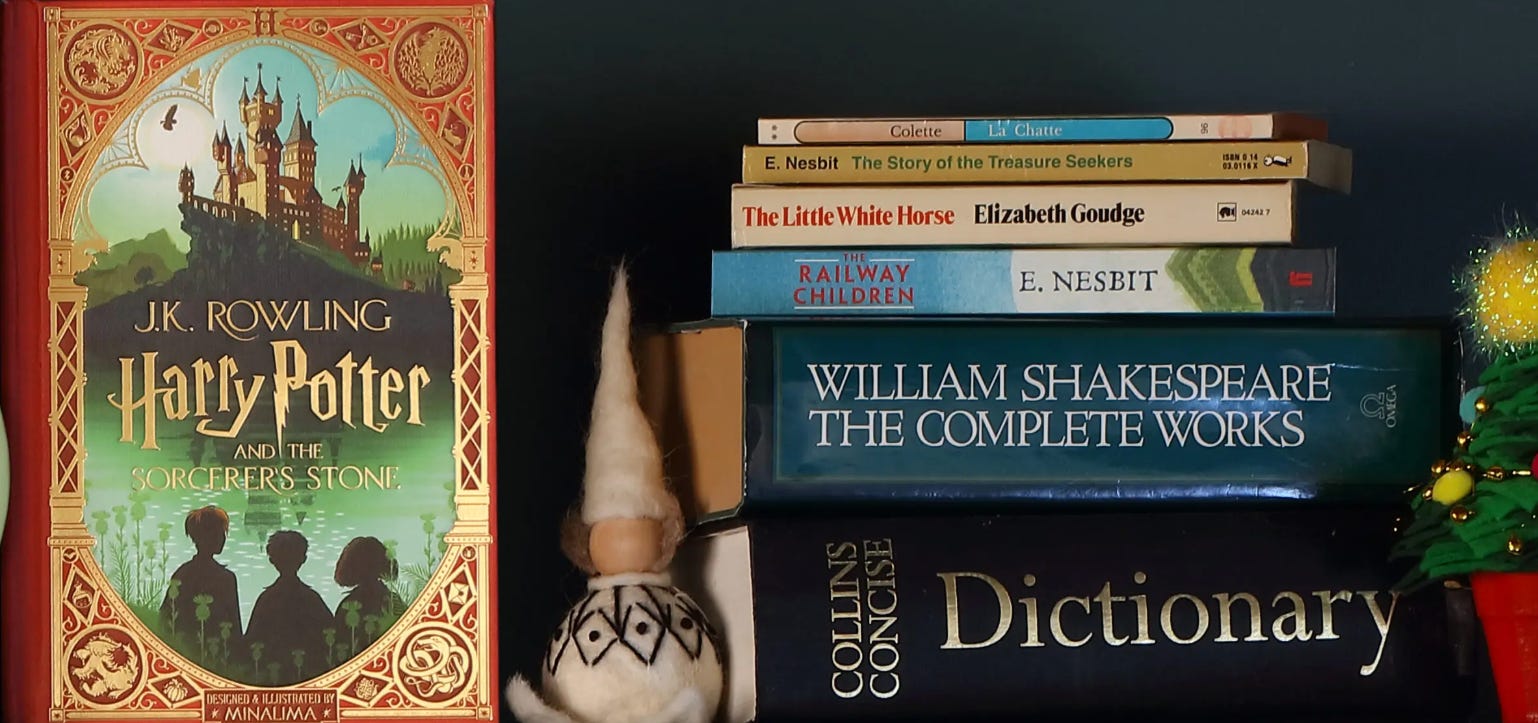
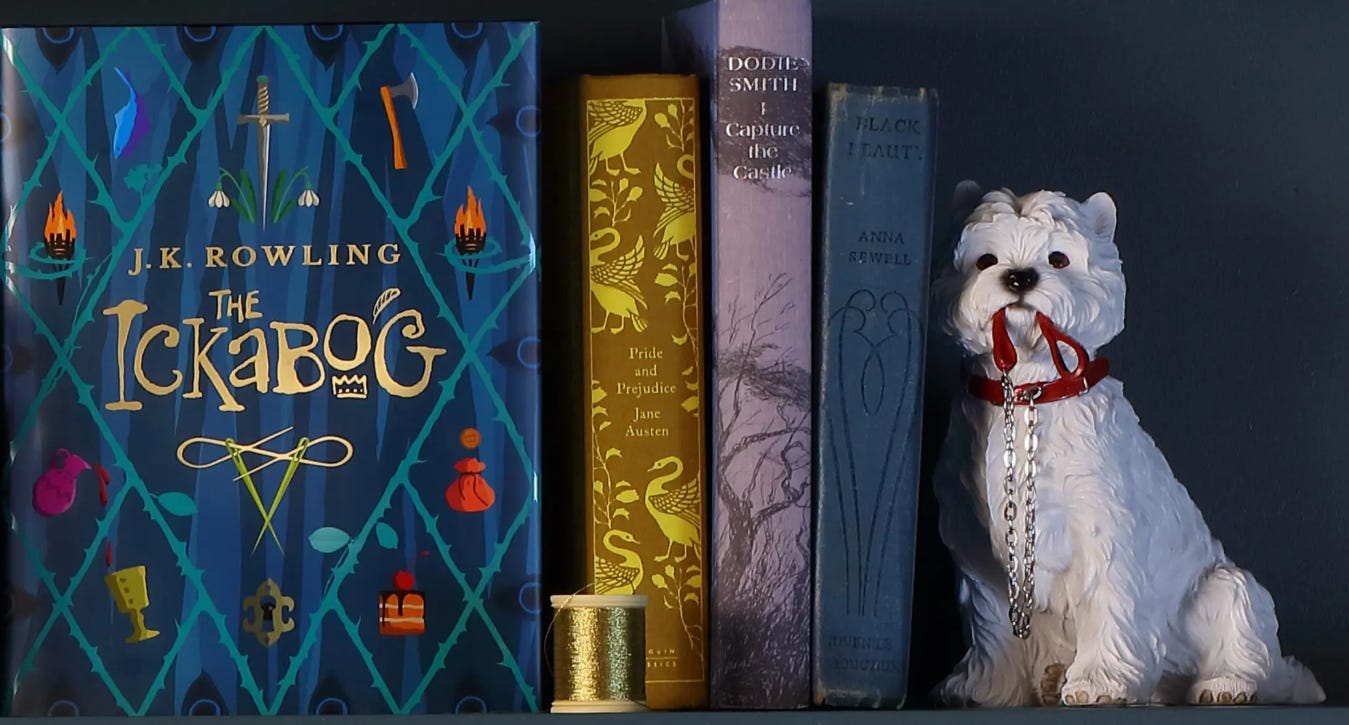

Question 4. Which, when you consider the other books on that virtual bookshelf -- works by Colette, Austen, Shakespeare, Goudge, Nesbit, and Sewell’s Black Beauty, something of a ‘Rowling’s Favorite Books and Authors as a Young Reader’ collection, I think we have to assume she is saying, “I read this book as a child or adolescent and loved it.” Taking that as our jumping off place, John, and having read my piece, do you wish you had read it before writing Harry Potter’s Bookshelf?
Harry Potter’s Bookshelf: The Great Books behind the Hogwarts Adventures John Granger 2009
Literary Allusion in Harry Potter Beatrice Groves 2017
Question 5. So, yes, I certainly do think it belongs -- with Aurora Leigh and Little Women -- on the ‘Rowling Reader Essential Reading List.’ The part I thought most interesting in your piece was, of course, the Shed elements I missed. Rowling famously said that she loved Jo Marsh in Little Women because, in addition to the shared name and the character being a wannabe writer, she was plain, a characteristic with which the young, plain Jane Rowling easily identified. What correspondences do you think Little Jo would have found between her life and Cassandra Mortmain’s?
Nick Jeffery’s Kanreki discussion of Rowling’s House on Edge of Estate with Two Children, Bad Dad ‘Golden Thread’ (Lethal White)
Question 6. Have I missed any, John?
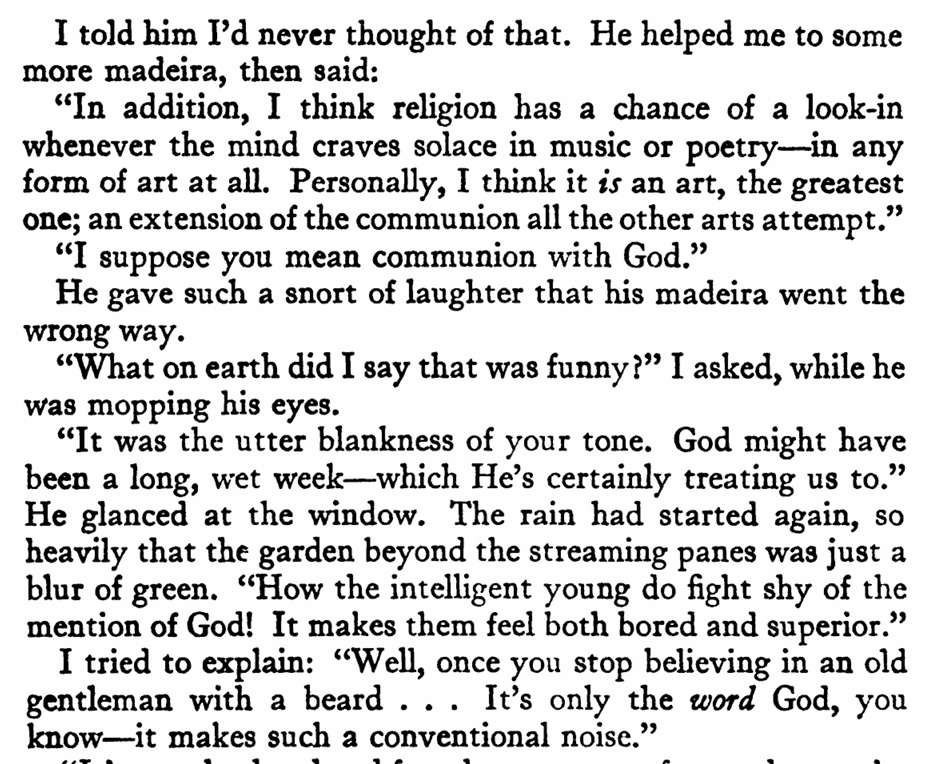
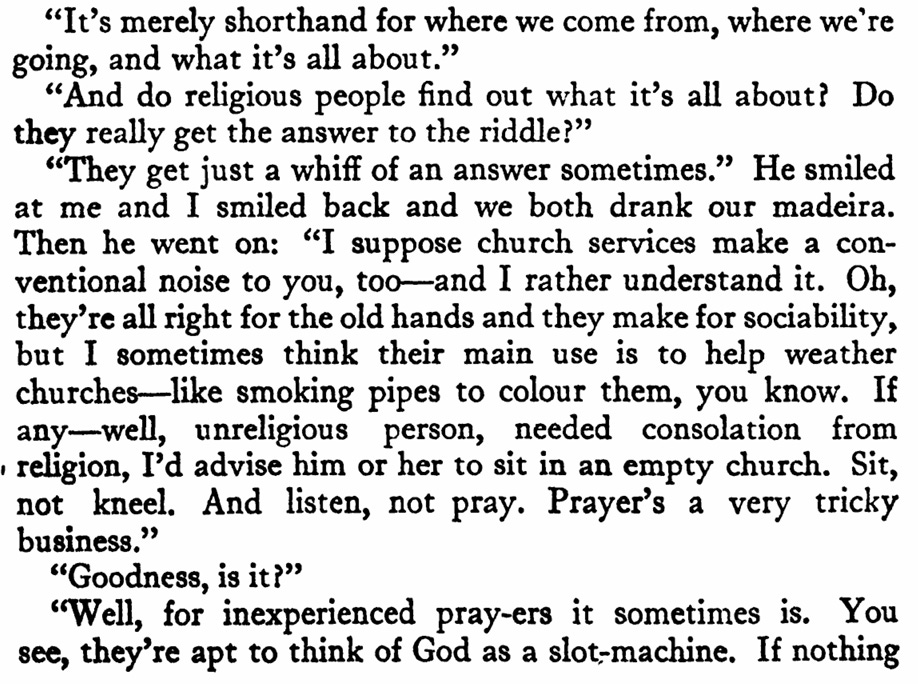
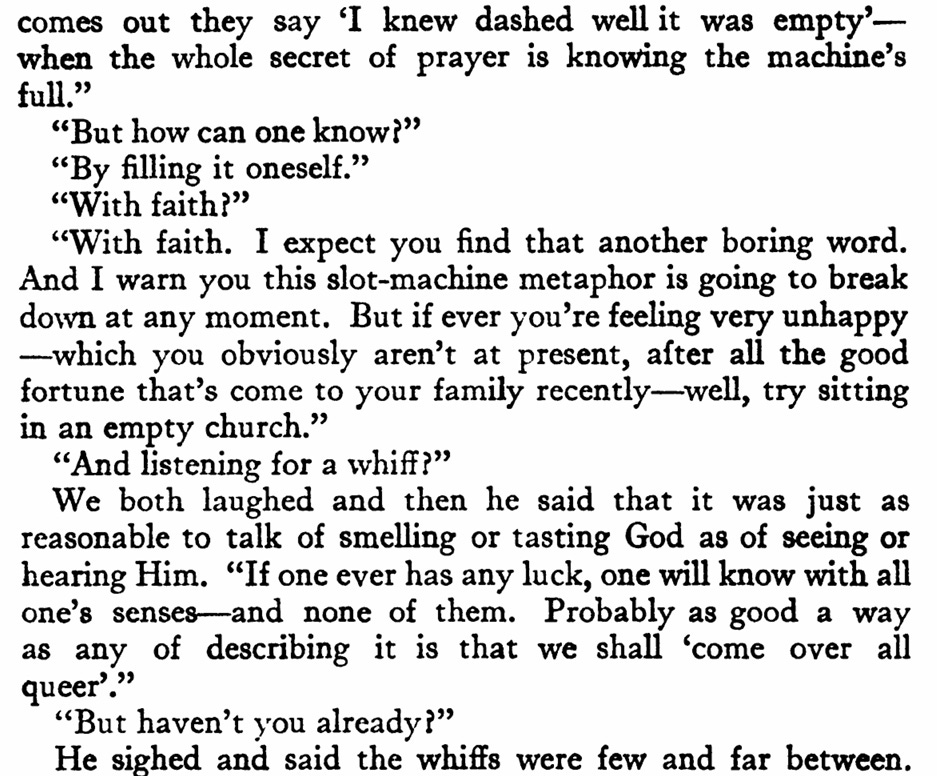
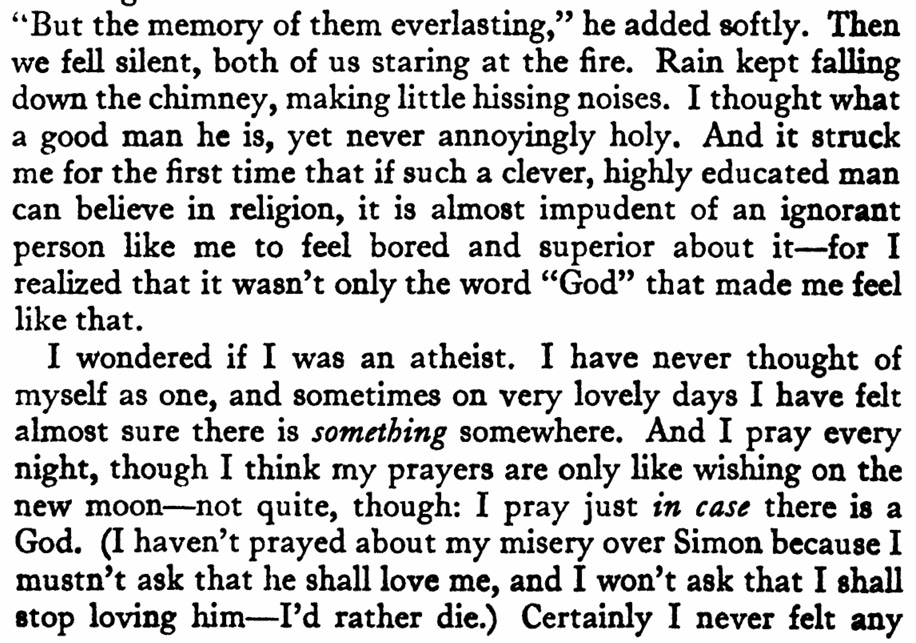
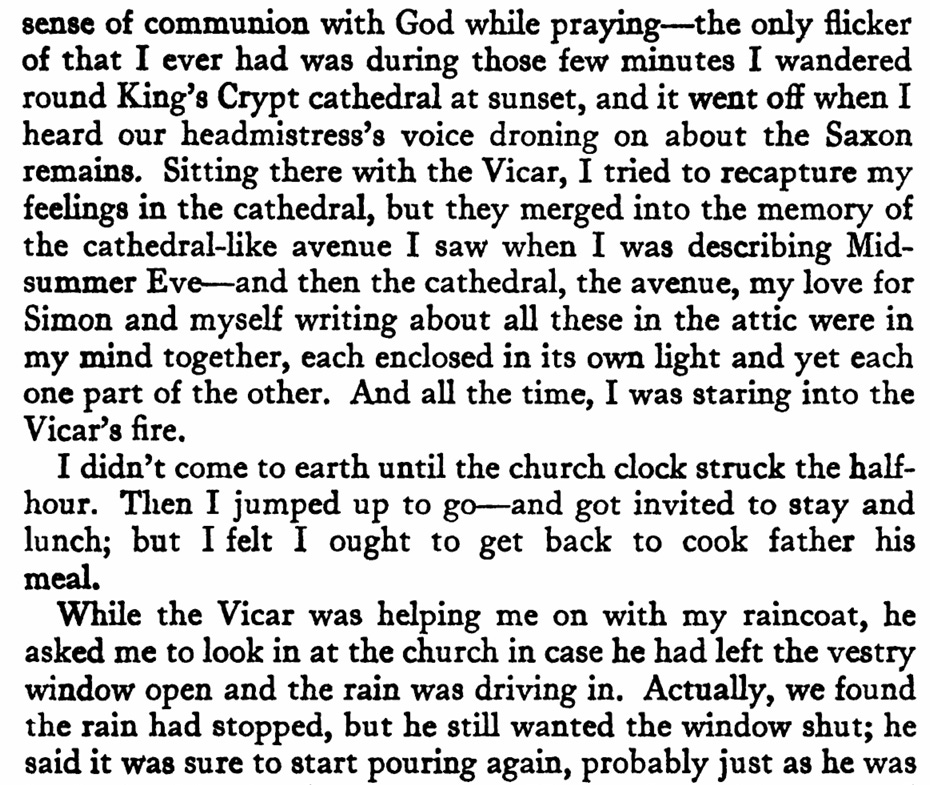
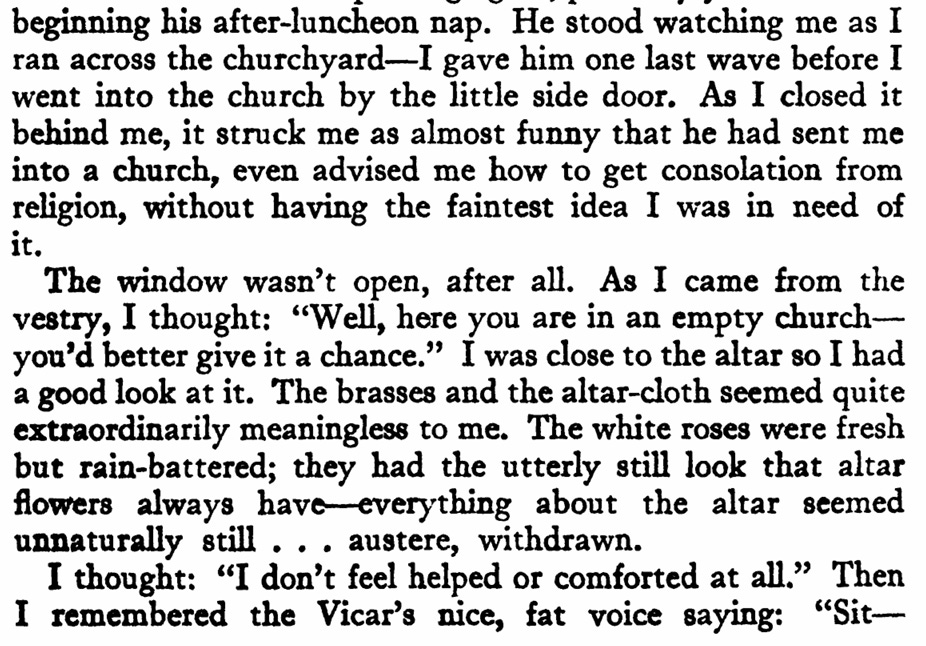
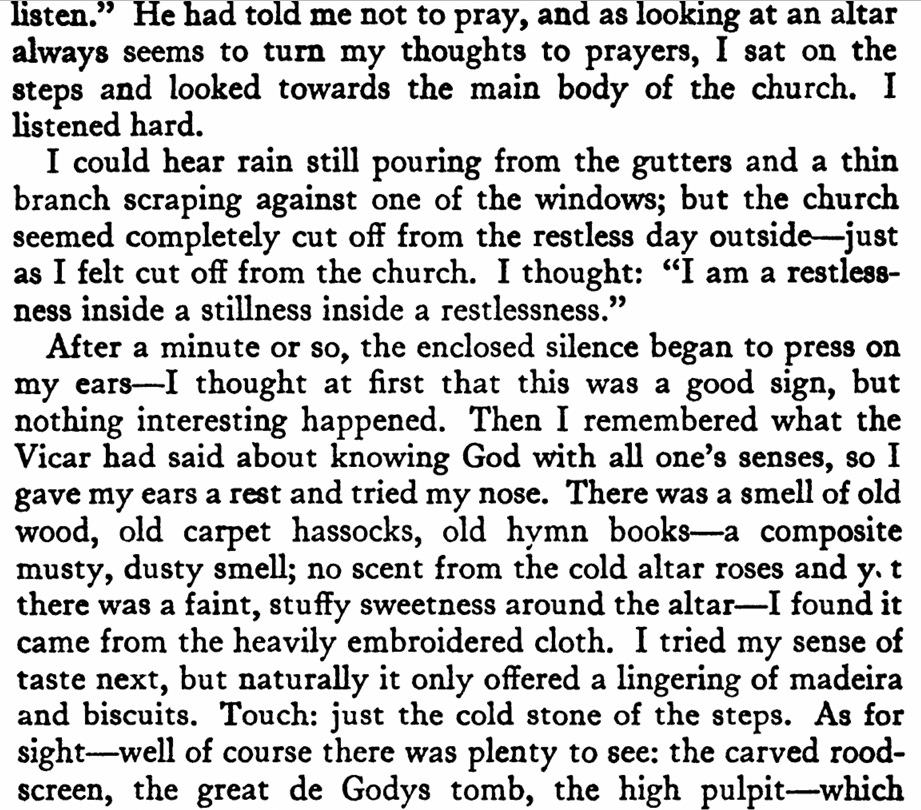
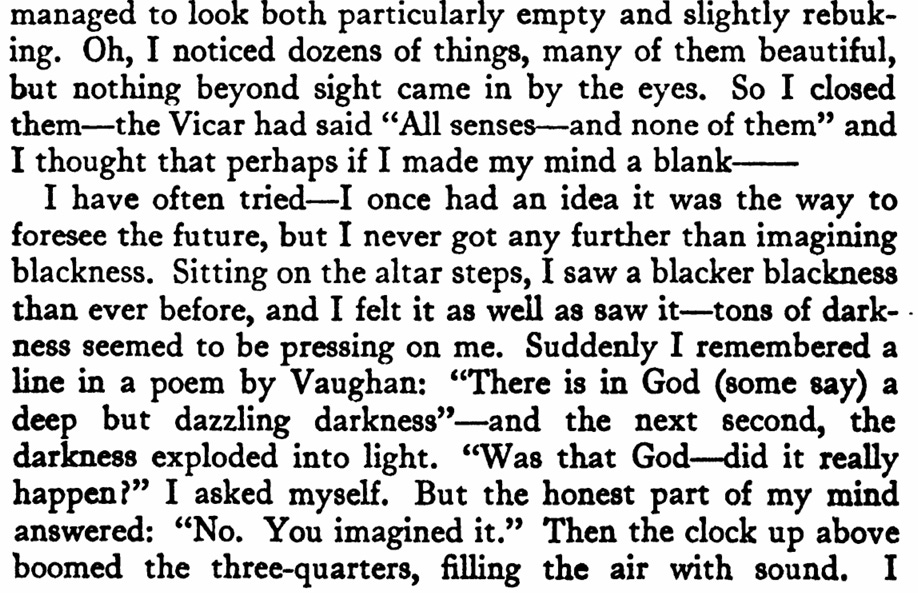
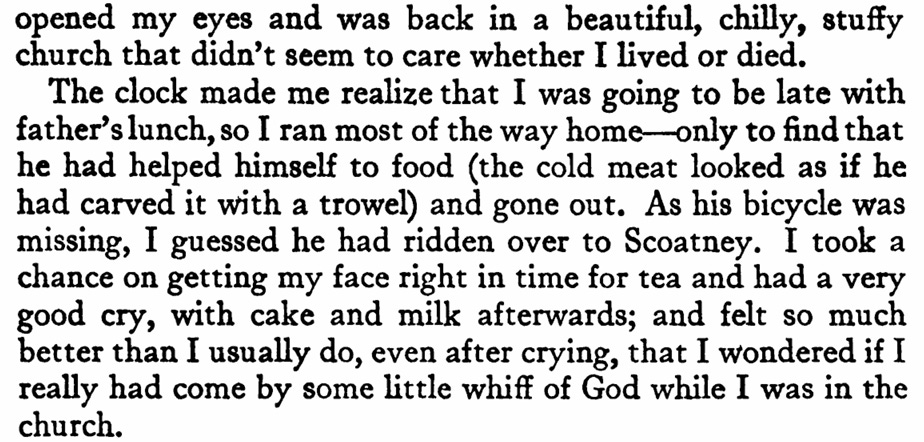
Question 7. Forgive me for thinking, Nick, that Cassandra’s time in church taking in the silence there with all her senses may be the biggest take-away for the young Rowling; if the Church of England left their chapel doors open in the 70s as churches I grew up in did in the US, it’s hard to imagine Jo the Reader not running next door to see what she felt there after reading that passage. (Chapter 13, conversation with vicar, pp 234-238). The correspondence with Beatrice Groves’ favorite scene in the Strike novels was fairly plain, no? What other scenes and characters do you see in Rowling’s work that echo those in Castle?
Chapter 13, I Capture the Castle: Cassandra’s Conversation with the Vicar and time in the Chapel vis a vis Strike in the Chapel after Charlotte’s Death
Question 8. I’m guessing, John, you found some I have overlooked?
Question 9. The Mortmain, Colly, and Cotton cryptonyms as well as Topaz and Cassandra, the embedded text complete with intratextuual references (Simon on psycho-analysis), the angelic servant-orphan living under the stairs (or Dobby’s lair!) an orphan with a secret power he cannot see in himself, the great Transformation spell the children cast on their father, an experiment in psychomachia a la the Shrieking Shack or Chamber of Secrets, the hand-kiss we see at story’s end from Smith, love delayed but expressed (Silkworm finish?), the haunting sense of the supernatural everywhere especially in the invocation that Rose makes to the gargoyle and Cassandra’s Midsummer Night’s Eve ritual with Simon, the parallels abound. Ghosts!
Please note that John gave “cotton” a different idiomatic meaning than it has; the correct meaning is at least as interesting given the Cotton family’s remarkable fondness for all of the Mortmains!
Kanreki ‘Embedded Text’ Golden Thread discussion 1: Crimes of Grindelwald
Kanreki ‘Embedded Text’ Golden Thread discussion 2: Golden Thread Survey, Part II
Rose makes an elevated Faustian prayer to a Gargoyle Devil: Chapter IV, pp 43-46
Cassandra and Simon celebrate Midsummer Night’s Eve: Chapter XII, pp 199-224
Let’s talk about the intersection of Lake and Shed, though, the shared space of Rowling’s bibliography, works that shaped her core beliefs and act as springs in her Lake of inspiration and which give her many, even most of the tools of intentional artistry she deploys in the Shed. What did you make of the Bronte-Austen challenge that Rose makes explicitly in the story to her sister, the writer and avid reader?
“How I wish I lived in a Jane Austen novel.” [said Rose]
I said I’d rather be in a Charlotte Bronte.
“Which would be nicest—Jane with a touch of Charlotte, or Charlotte with a touch of Jane?”
This is the kind of discussion I like very much but I wanted to get on with my journal, so I just said: “Fifty percent each way would be perfect,” and started to write determinedly.
Question 10. So, I’m deferring to both Elizabeth Barrett Browning and J. K Rowling. Elizabeth Barrett Browning valued intense emotion, social commentary, and a grand scope in literature, which led her to favour the passionate depth of the Brontës over the more restrained, ironical style of Jane Austen. Rowling about her two dogs: “Emma? She’s a bundle of love and joy. Her sister, Bronte, is a bundle of opinions, stubbornness and hard boundaries.”
Set in the 30s, written in the early 40s, but it seems astonishingly modern. Because her father is a writer, a literary novelist of the modern school, do you think there are other more contemporary novelists Dodie Smith was engaging than Austen and Bronte?
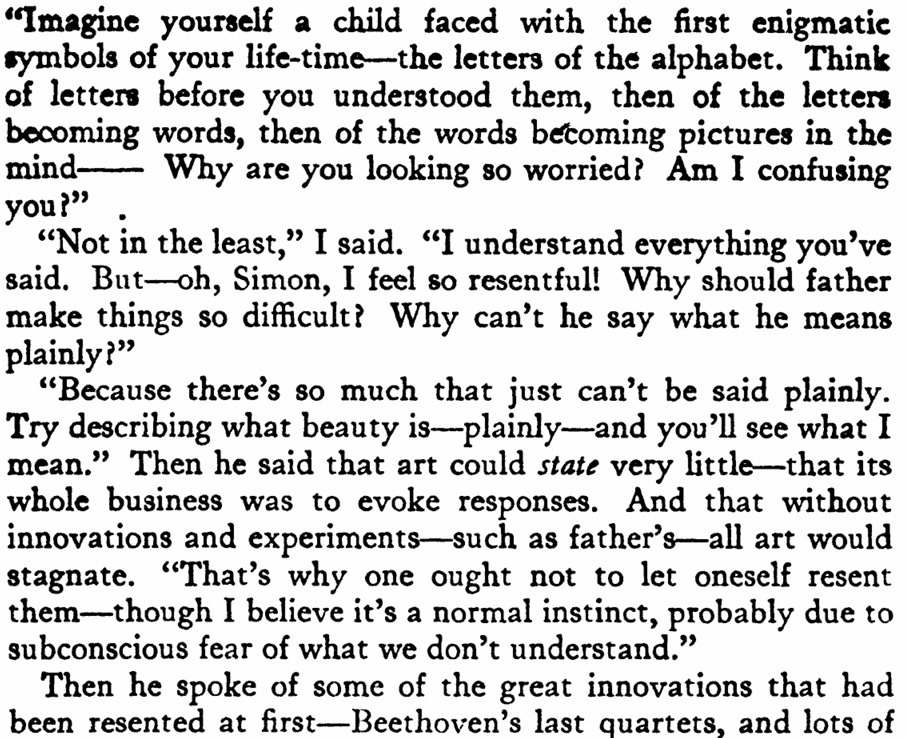
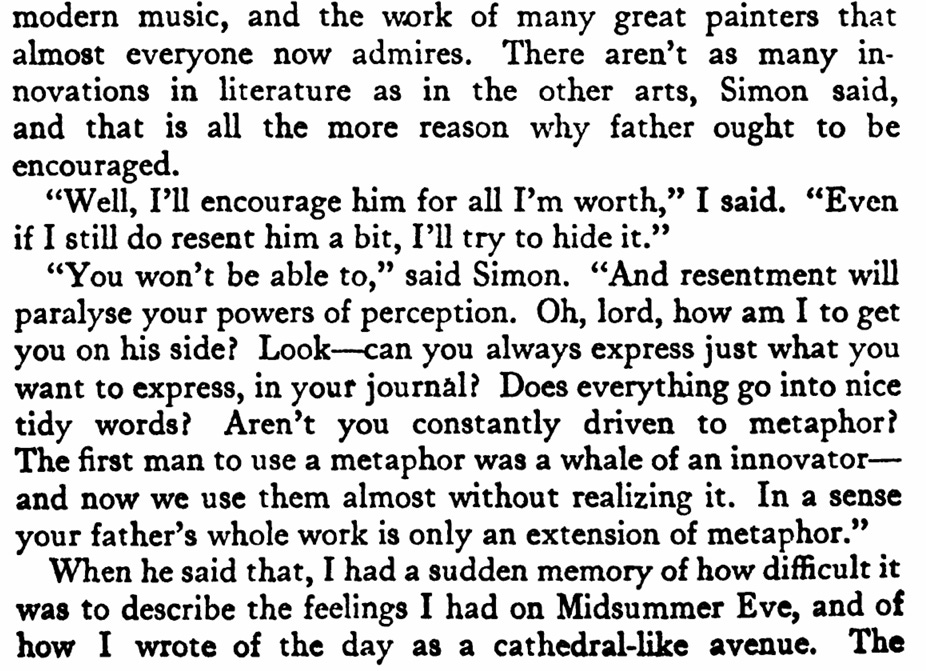
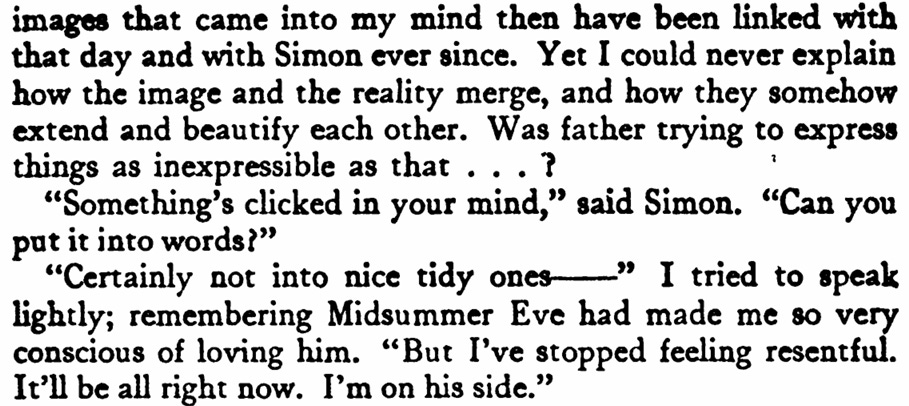
Question 11. Mortmain is definitely Joyce, then, though Proust gets the call-out, and perhaps the most important possible take-away Rowling the attentive young reader would have made would have been Smith’s embedded admiration for Joyce the “Enigmatist” she puts in Simon’s mouth at story’s end (Chapter XVI, pp 336-337) and her implicit criticism of literary novels and correction of that failing. Rowling’s re-invention of the Schoolboy novel with its hidden alchemical, chiastic, soul-in-crisis-allegories and embedded Christian symbolism can all be seen as her brilliant interpretation of Simon’s explanation of art to Cassandra and her dedication to writing a book like I Capture the Castle.
Reference to James Joyce by Simon Cotton, Chapter IX, p 139:
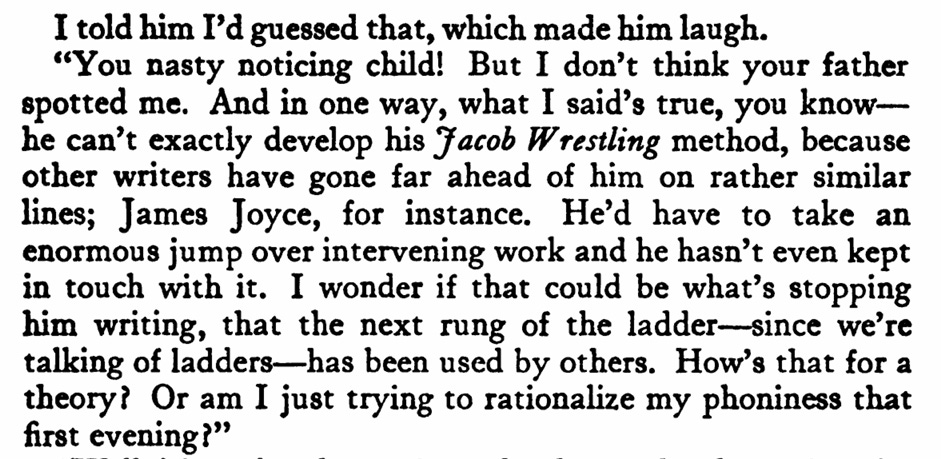
The Simon and Cassandra conversation about her father’s novels, call it ‘The Writer as Enigmatist imitating God in His Work:’ Chapter XVI, pp 331-334
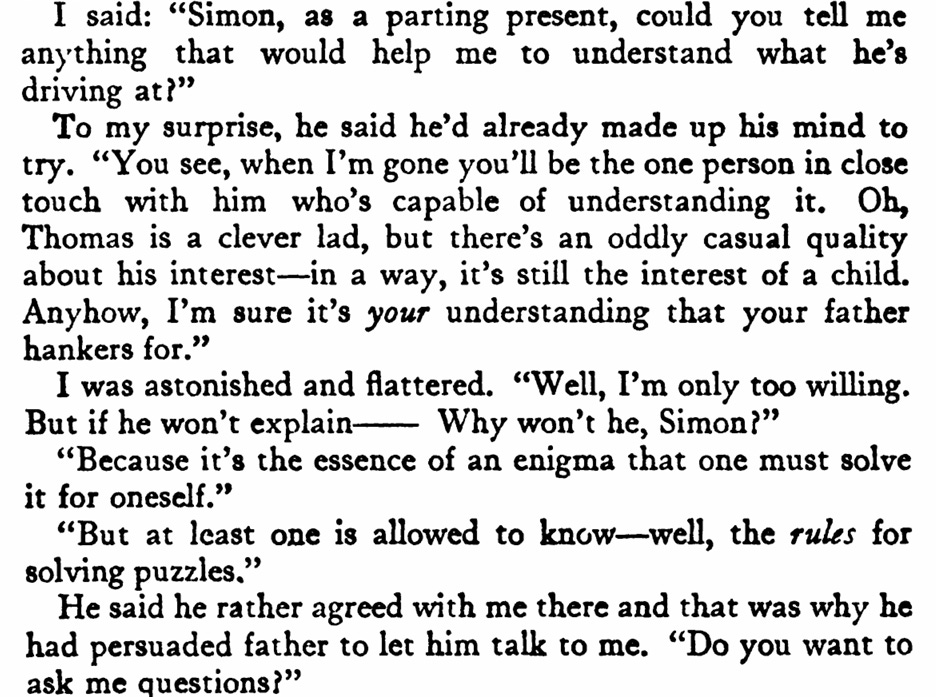
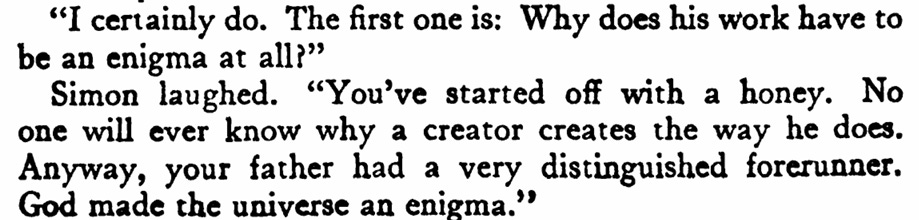
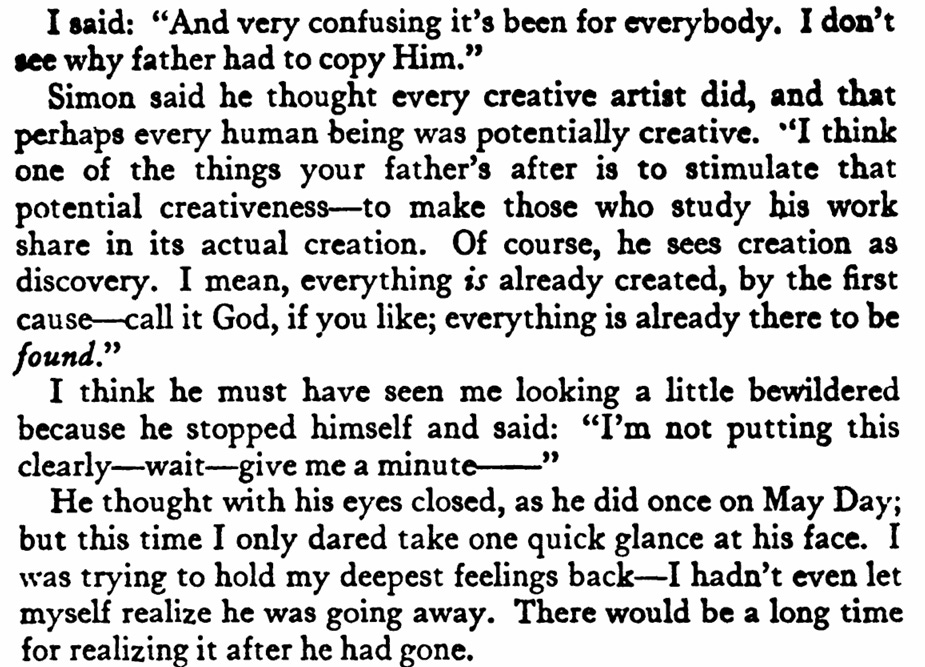
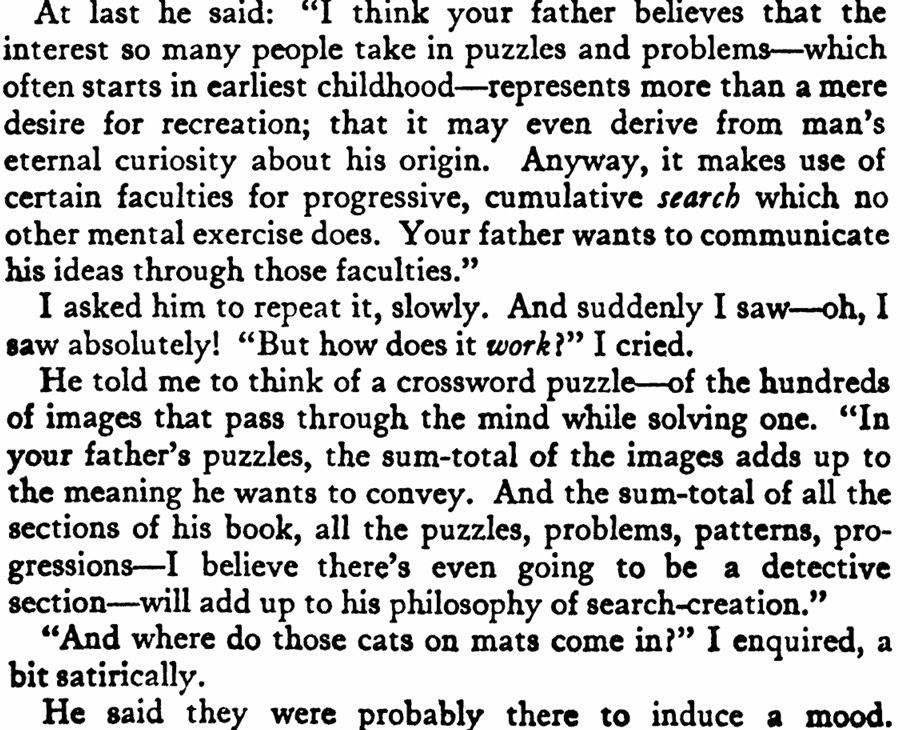
Sacred art differs from modern and postmodern conceptions of art most specifically, though, in what it is representing. Sacred art is not representing the natural world as the senses perceive it or abstractions of what the individual and subjective mind “sees,” but is an imitation of the Divine art of creation. The artist “therefore imitates nature not in its external forms but in its manner of operation as asserted so categorically by St. Thomas Aquinas [who] insists that the artist must not imitate nature but must be accomplished in ‘imitating nature in her manner of operation’” (Nasr 2007, 206, cf. “Art is the imitation of Nature in her manner of operation: Art is the principle of manufacture” (Summa Theologia Q. 117, a. I). Schuon described naturalist art which imitates God’s creation in nature by faithful depiction of it, consequently, as “clearly luciferian.” “Man must imitate the creative act, not the thing created,” Aquinas’ “manner of operation” rather than God’s operation manifested in created things in order to produce ‘creations’
which are not would-be duplications of those of God, but rather a reflection of them according to a real analogy, revealing the transcendental aspect of things; and this revelation is the only sufficient reason of art, apart from any practical uses such and such objects may serve. There is here a metaphysical inversion of relation [the inverse analogy connecting the principial and manifested orders in consequence of which the highest realities are manifested in their remotest reflections[1]]: for God, His creature is a reflection or an ‘exteriorized’ aspect of Himself; for the artist, on the contrary, the work is a reflection of an inner reality of which he himself is only an outward aspect; God creates His own image, while man, so to speak, fashions his own essence, at least symbolically. On the principial plane, the inner manifests the outer, but on the manifested plane, the outer fashions the inner (Schuon 1953, 81, 96).
The traditional artist, then, in imitation of God’s “exteriorizing” His interior Logos in the manifested space-time plane, that is, nature, instead of depicting imitations of nature in his craft, submits to creating within the revealed forms of his craft, which forms qua intellections correspond to his inner essence or logos.[2] The work produced in imitation of God’s “manner of operation” then resembles the symbolic or iconographic quality of everything existent in being a transparency whose allegorical and anagogical content within its traditional forms is relatively easy to access and a consequent support and edifying shock-reminder to man on his spiritual journey. The spiritual function of art is that “it exteriorizes truths and beauties in view of our interiorization… or simply, so that the human soul might, through given phenomena, make contact with the heavenly archetypes, and thereby with its own archetype” (Schuon 1995a, 45-46).
Rowling in her novels, crafted with tools all taken from the chest of a traditional Sacred Artist, is writing non-liturgical Sacred Art. Films and all the story experiences derived of adaptations of imaginative literature to screened images, are by necessity Profane Art, which is to say per the meaning of “profane,” outside the temple or not edifying spiritually. Film making is the depiction of how human beings encounter the time-space world through the senses, not an imitation of how God creates and a depiction of the spiritual aspect of the world, a liminal point of entry to its spiritual dimension. Whence my describing it as a “neo-iconoclasm.”
I want to close this off with our sharing our favorite scene or conversation in Castle with the hope that our Serious Reader audience will read Capture and share their favorites. You go first, Nick.
Cassandra and Rose Mortmain, country hicks in the Big City of London: Chapter VI, pp 76-77
Question 12. And yours, John?
Cassandra Mortmain ‘Moat Swimming’ with Neil Cotton, Chapter X, 170-174
Cassandra seeing her dead mother (think Harry before the Mirror of Erised at Christmas time?): Chapter XV, pp 306-308


